Place Value: Tens and Ones
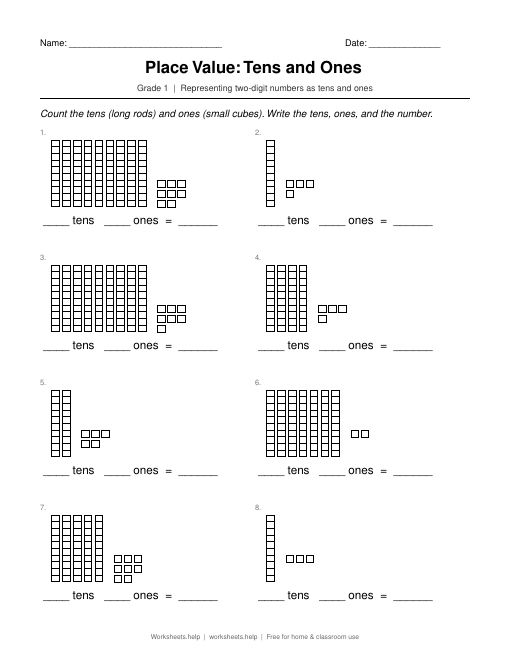
Skill: Representing two-digit numbers as tens and ones
Download PDF worksheetAnswer key (PDF)
Free for personal and classroom use. Print at 100% / "Actual size" on US Letter paper.
About this worksheet
Understanding that a two-digit number is made of tens and ones is one of the big ideas of first-grade math. This worksheet shows eight pictures of base-ten blocks: long rods that stand for ten and small cubes that stand for one. Children count the rods and cubes, write how many tens and ones they see, and then write the two-digit number.
How to use it: point out that each rod is made of ten small squares stacked together, so one rod is the same as ten ones. Have your child count the rods first by tens ("10, 20, 30") and then count on by ones for the cubes ("31, 32, 33"). Next, connect the picture to the written number: in 34, the 3 tells how many tens and the 4 tells how many ones. Real base-ten blocks, bundled straws, or groups of ten cereal pieces make this idea even more concrete for children who need hands-on practice.
The answer key shows the tens, ones, and number for every picture. A common mistake is reversing the digits (writing 43 for 4 ones and 3 tens), so if you see that, return to the picture and ask which digit tells the tens. This worksheet supports Common Core standard 1.NBT.B.2 (understand that the two digits of a two-digit number represent amounts of tens and ones). It builds the base for adding and subtracting with regrouping in second grade.
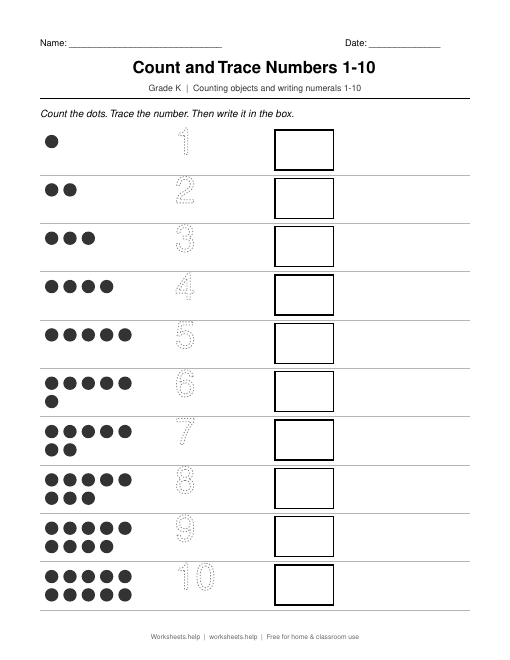 Count and Trace Numbers 1-10
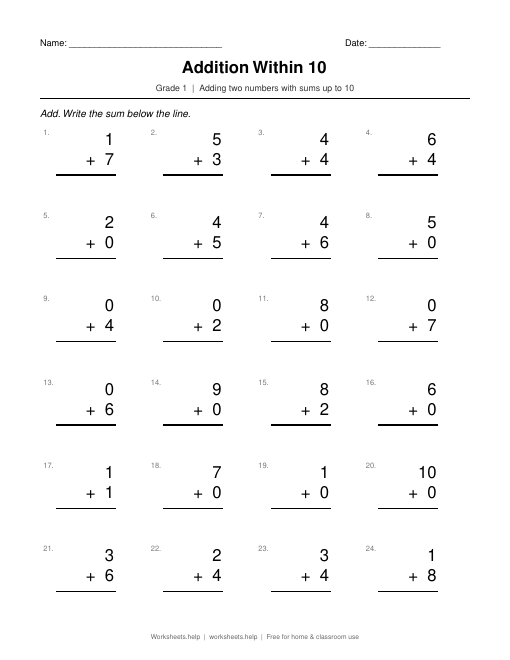 Addition Within 10
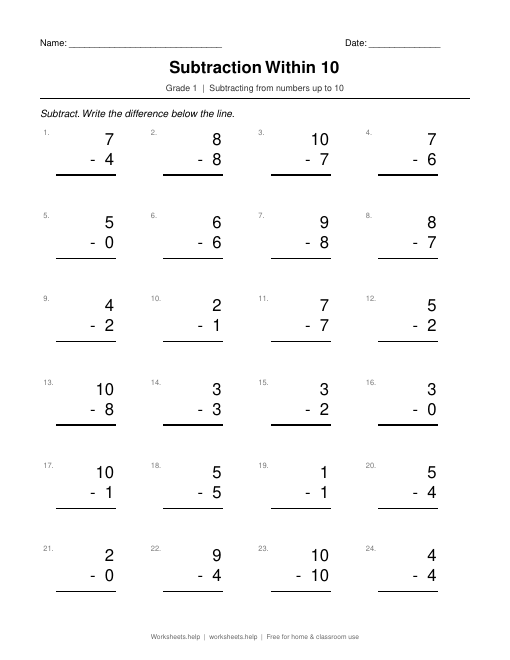 Subtraction Within 10